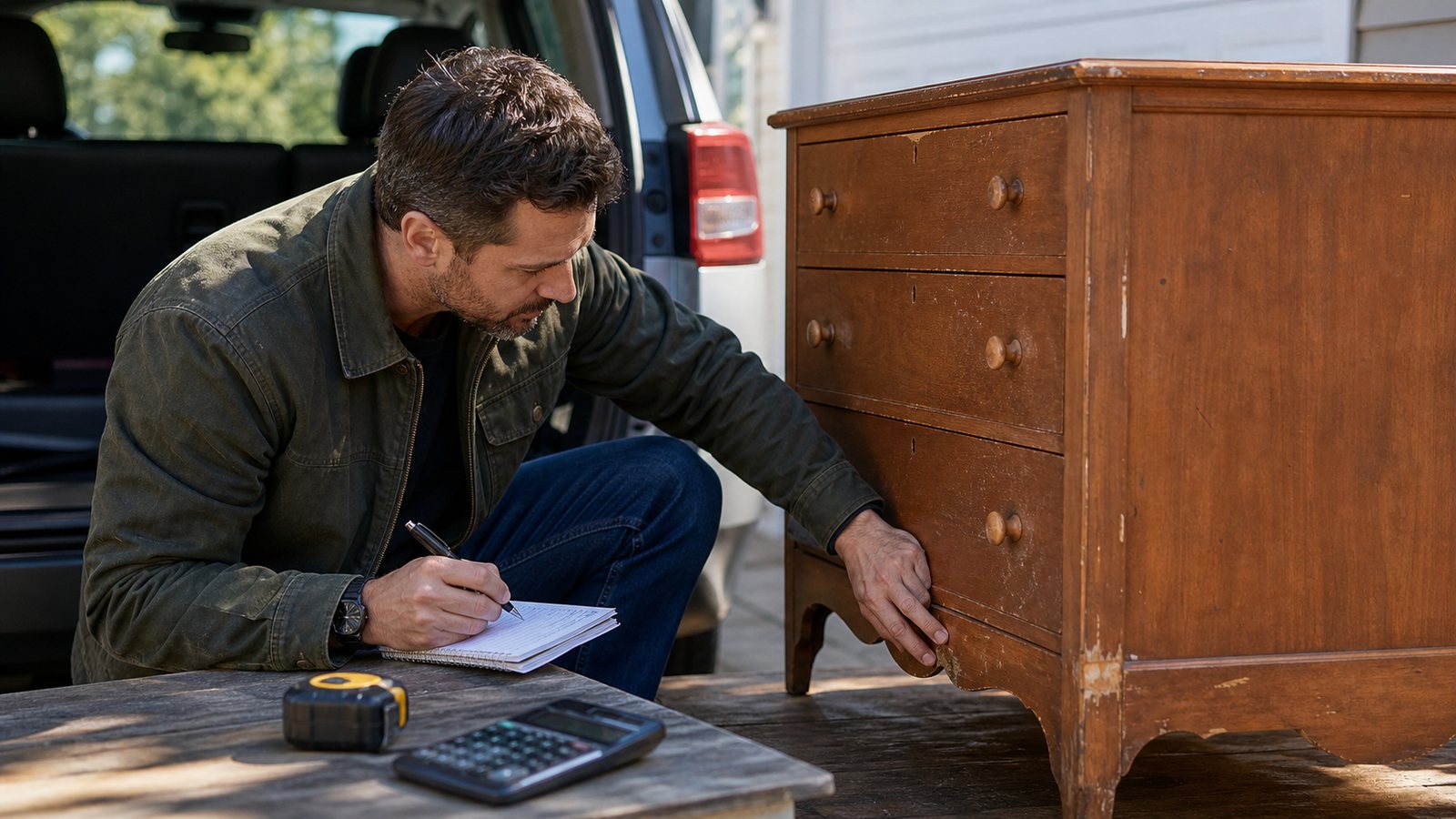
The right offer is not just the lowest number you can say without feeling awkward. It is the number that keeps the project worth doing after supplies, repairs, pickup time, selling effort, and your profit target are included.
Flipper Field Note
A good negotiation feels easier when the number is grounded in the work. Instead of haggling just to haggle, you can point to drawer function, missing hardware, pickup distance, finish removal, or supply cost. That keeps the offer fair and protects your margin before the project starts charging you in gas, time, and Motrin.
The safe offer starts with expected finished value, not the seller's asking price.
Use Defects As Evidence
Condition notes give you a fair reason to offer less without sounding arbitrary.
Leave A Buffer
Every unknown problem should either reduce the offer or increase contingency.
Formula
Use A Simple Buy-Ceiling Formula
A practical buy ceiling starts with expected resale price, then subtracts target profit, supplies, hardware, transport, platform fees, contingency, and the value of your labor. If the seller's price is above that ceiling, the project needs a lower offer or a pass.
Expected resale should be conservative until the piece is finished.
Labor should be valued even if the founder is doing the work alone.
Contingency should rise with unknowns, old finish, odor, and structural risk.
Negotiation
Let The Condition Notes Support The Offer
A seller is more likely to understand an offer when it is tied to visible work: missing pulls, drawer repairs, water marks, veneer lifting, pickup distance, or finish removal. The condition step should generate both internal risk notes and seller-facing questions.
Decision
Know When A Free Piece Still Costs Too Much
Free furniture can still be a bad buy if transport, repair, storage, and low resale value make the project slow and crowded. The buy ceiling can be zero or negative when the piece is not worth the time.
Planning Worksheet
What To Carry Into Your Project Plan
Item
Why It Matters
Planning Note
Expected resale price
The finished value sets the outer limit.
Use local comps, quality, style, and buyer demand.
Target profit
Profit keeps the flip from becoming unpaid labor.
Set a minimum before shopping for the piece.
Labor estimate
Time is the cost most flippers undercount.
Separate active labor from waiting time.
Contingency
Surprises are normal in used furniture.
Increase buffer when the seller photo or history is weak.